
OpenAI's newest model can find and exploit serious software flaws. The best defense is not another chatbot. It is a tightly controlled team of models that can discover, prove, patch, and test vulnerabilities before they reach production.
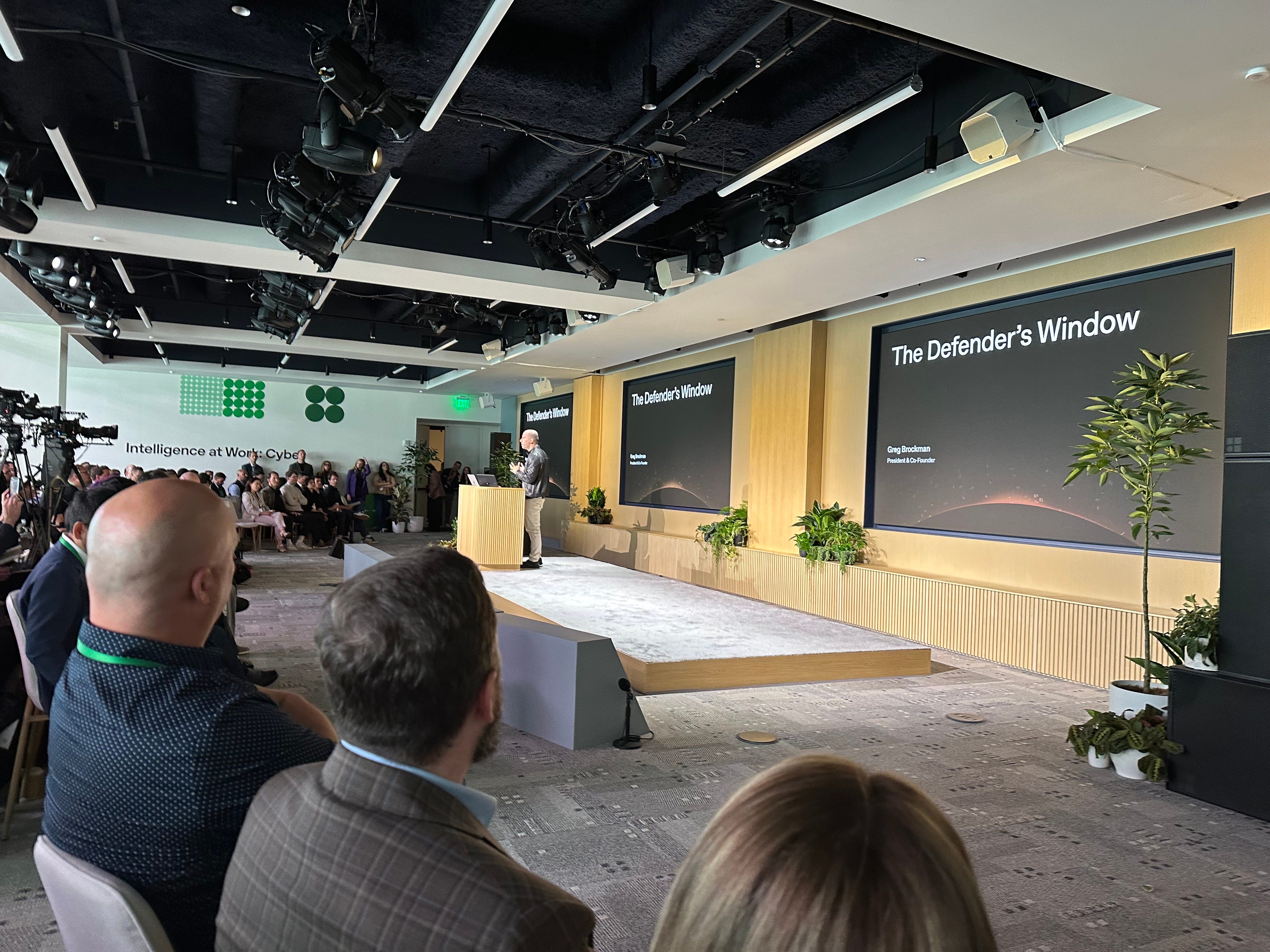
Last Thursday, OpenAI gathered roughly 300 security leaders and Fortune 100 CISOs in San Francisco for candid conversations about cybersecurity and a warning with a product launch.
The product was GPT-6 Astra, OpenAI's most capable model yet. The warning was that defenders may have only a limited period to use systems like Astra before comparable cyber capabilities become widely available to attackers.
OpenAI calls this period the defender's window.
Some vetted teams are using powerful cyber models without restrictions that aren't available to the general public yet. That gives defenders a temporary advantage, but the advantage matters only if they use it to remove vulnerabilities now.
That is why Astra is only half the story. The other half is how companies such as Microsoft and Cloudflare are building multi-model security systems: one model searches, another challenges the finding, deterministic tools reproduce the bug, and a controlled pipeline tests the patch. The goal is not to produce the longest vulnerability report. It is to ship fewer exploitable weaknesses and at agentic scale.
Astra Raises the Cyber Capability Ceiling
OpenAI classifies GPT-6 Astra at its Critical cybersecurity capability level, the highest cyber-risk category the company has publicly described.
The company's evaluations illustrate why it reached that conclusion.
Astra scored 100% on ExploitBench, a test built around known vulnerabilities. It reached 88% on its first attempt at SRE-Bench tasks involving reverse engineering binaries without source code, and 99.2% within four attempts.
In the real world, OpenAI tested Astra against 20 recent high-severity vulnerabilities in Google's V8 JavaScript engine. The model reportedly found and used two previously unknown zero-days--flaws that the software maker did not yet know existed. In separate expert testing, Astra helped construct a chain that moved from a browser compromise to commands on the host machine, as well as a privilege-escalation chain against a hardened operating system.
These are serious results, but they need context. Astra is not merely a security scanner. It can navigate repositories, use terminals and browsers, reason across long contexts, edit code, run tools, and maintain state through extended tasks. Those broader abilities make it useful for both finding a flaw and participating in the complicated work required to fix it.
The Defender's Window
Discovery alone does not make a system safer. Remediation does.
Open AI offers two cybersecurity focused models available through partners or vetting process that try to give comapnies a head start.
Daybreak Blue gives approved defenders access to general-purpose frontier capabilities with safeguards adjusted for defensive work.
Daybreak Red supports more sensitive tasks such as exploit validation, advanced vulnerability research, penetration testing, and red teaming.
The window narrows as model capability spreads. That diffusion is already visible. Daybreak is available through controlled channels. Anthropic offers more permissive Mythos models to vetted organizations. Z.AI's GLM-5.3, a model with published cyber capabilities, can be downloaded as open weights and run by anyone who has the required infrastructure.
There is no proven date when attackers reach parity. The "window" is OpenAI's strategic forecast, not a countdown clock. But the direction is clear: the cost of searching software for weaknesses is falling, while many companies still need weeks or months to deploy a patch.
Why the Best Defense Uses More Than One Model
The cybersecurity loop:
discovery -> validation -> prioritization -> patch creation -> testing -> disclosure -> deployment
No model finds every bug. Different models explore code differently, notice different patterns, and fail in different ways.
That makes model diversity useful for the same reason companies use defense in depth elsewhere in security. One layer can catch what another misses.
It also creates a practical division of labor. A powerful model such as Astra might perform deep repository reconnaissance or difficult exploit validation. A cheaper model can explore hundreds of lower-probability leads. A model trained differently can challenge the first model's conclusions. Deterministic tools can then decide whether the alleged exploit actually works.
Several companies are already building this way.
Microsoft Makes Models Debate One Another
Microsoft's MDASH system uses more than 100 specialized agents: a frontier model leads, smaller models debate findings, and a second frontier model provides an independent challenge. The agents map code, search selected paths, remove duplicates, and try to prove exploitability.
Microsoft says MDASH found 16 new Windows vulnerabilities, including four Critical remote-code-execution flaws. The important design choice is that one model is not investigator, judge, and jury.
Cloudflare Separates Discovery From Validation
Cloudflare uses one model to discover vulnerabilities and another to validate them. Its system reduced 20,799 raw candidates to 7,245 actionable findings after validation and deduplication; confirmed findings require a proof of concept and a candidate patch that survives testing.
Cloudflare also combines source findings with production context such as route activity, traffic, probes, and existing firewall coverage. The model can propose a patch or firewall rule, but it cannot deploy either one.
What Companies Should Do Now
Build a security pipeline that can use Astra, GLM, Mythos, or the next capable model without trusting any of them completely.
Start with narrow, high-value targets: internet-facing services, authentication code, privilege boundaries, critical infrastructure software, and frequently exploited dependencies.
Give models enough repository and production context to prioritize real risk, but minimize the data they receive. Keep credentials short-lived, tool permissions scoped, and execution isolated.
Use a second model or agent to challenge findings. Then demand evidence outside the model: a reproducible exploit, a failing test, a passing patch, and a clean regression suite.
Most importantly, fund the human side of remediation. Someone still needs to own the code, assess business impact, coordinate disclosure, schedule releases, and accept responsibility for deployment.
The Bottom Line
GPT-6 Astra shows how quickly the cyber capability ceiling is rising. OpenAI says a general-purpose model can now find fresh vulnerabilities, reverse engineer binaries, and help build multi-stage exploit chains under controlled conditions.
The most credible strategy uses Astra and other models as a team. Let them search different parts of the problem. Let them challenge one another. Require executable proof. Use production context to prioritize. Test every patch. Keep authorization and deployment outside the models.
The organizations that benefit most from the defender's window will not be those that generate the most findings. They will be those that turn the highest-value findings into tested production fixes.